What is a meme coin and how do traders actually make money on it?
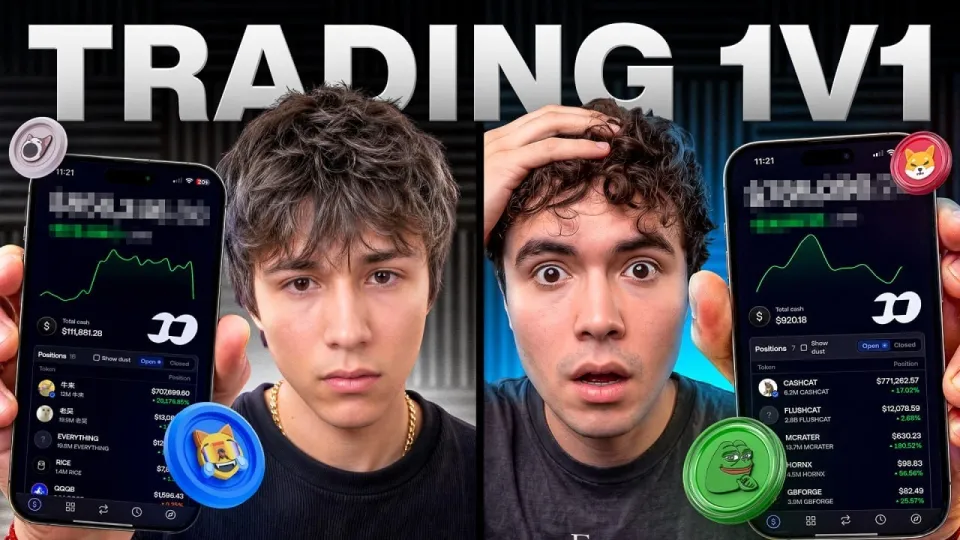
Video: I Challenged A Pro Memecoin Trader (Who Won?)
Want articles like this for your own video to promote it on YouTube and Google? Order them through the Telegram bot @sat_sit_bot. It writes articles around your video, embeds the video and publishes them on popular niche websites (no ads). Your first 50 articles are free.
· based on the channel insentos
A meme coin is a crypto token whose value comes from community attention, memes and narrative rather than from revenue, a product or a treasury. Trading it means speculating on the flow of attention and liquidity, not on fundamentals, and the practical version of that activity looks like short holding times, small position sizes and strict rules for getting out. The insentos challenge video, where the host takes on a professional meme coin trader in a live session, is a useful window into how that process actually looks; you can follow the same tooling through a FOMO registration link used by the channel.
What actually makes a token a meme coin
A meme coin has no cash flow to model, so its price is a function of attention, liquidity and the behaviour of holders. That single fact explains almost everything else about the asset class: why a token can go from a few thousand dollars of liquidity to a multi-million valuation in hours, and why it can collapse just as fast when the crowd moves on. Analysts usually separate the category by origin and mechanics:
- Community and culture coins — launched for a joke, a mascot or an in-joke, with value derived from the size and persistence of the community.
- Fair-launch tokens — no presale, no venture allocation, liquidity provided at deployment; the launch itself is the marketing event.
- Celebrity and brand coins — attention borrowed from an existing audience, which is powerful but fragile if the figure behind it disengages.
- Derivative and copycat launches — near-identical names and tickers that ride the success of an earlier coin and usually end badly for late buyers.
The distinction matters because the risk profile differs. A culture coin with an established community can survive a drawdown; a copycat launch usually cannot. What all of them share is that supply, liquidity and holder distribution tell you more about the next hour than any narrative does.
How meme coin trading works on Solana and Ethereum
Meme coin trading is mostly an execution problem: finding a token early, checking that you can actually sell it, and getting out before the crowd does. On Solana, most of the action happens on launchpads and decentralised exchanges, with traders routing orders through aggregators and trading terminals rather than a single venue. Terminals such as Axiom bundle charting, wallet tracking, quick buys and sell presets into one interface, which is why they appear constantly in live trading content.
The workflow that experienced traders tend to describe looks like this:
- Source candidates from on-chain feeds, social timelines and wallet alerts rather than from a single trending list.
- Check contract and holder data — whether mint authority is revoked, whether liquidity is locked, how concentrated the top wallets are.
- Size the position so a total loss is survivable, because a meaningful share of these trades do go to zero.
- Set an exit plan before entry: a target for partial profit, a stop, and a rule for what happens if liquidity thins.
- Execute fast and accept slippage; on thin books, a slow exit costs more than a bad entry.
Ethereum meme coins follow the same logic with different plumbing: higher gas costs push traders toward larger positions and fewer trades, while Solana's low fees make rapid scalping viable. That fee structure is a big reason the meme coin scene concentrates on Solana.
What the insentos pro-vs-amateur challenge shows
The insentos video structures the session in two parts: a long stretch of live trading combined with advice, followed by a separate trading round with a guest. What makes it worth watching is not the result but the commentary — the guest keeps explaining the reasoning behind each entry and exit while positions are open, which is exactly the part beginners usually never see.
A few things stand out from the format itself:
- Live sessions are messy. Entries get missed, fills are partial, and the plan changes mid-trade.
- The gap between a small account and an influential one is real. Audience members point out that trading from a visible account changes the game, because your own orders move the book and your posts move attention.
- Advice and execution compete for attention. Talking through a trade while managing it is a skill in itself, and it is why recorded live sessions are more instructive than polished tutorials.
- Results in a single session say little. One round is a sample of one, and the outcome depends heavily on which tokens happened to launch that day.
The honest takeaway from challenges like this is that the process is teachable while the outcome is not. Copying a trader's entries without their exit discipline and position sizing tends to produce the opposite of the intended result.
Where meme coin traders actually lose money
Most losses in meme coin trading come from execution and risk management, not from picking the wrong token. The same mistakes appear repeatedly across live sessions and community discussions:
- Oversizing. A position large enough to hurt emotionally leads to panic selling at the worst moment.
- No exit rule. Holding for "one more leg" turns a planned scalp into an unplanned long-term bag.
- Ignoring liquidity. A token with a thin pool can show a profit on screen that cannot be realised on exit.
- Chasing green candles. Buying after a vertical move means buying from the people who already have a plan.
- Fee blindness. Priority fees, slippage and failed transactions add up quickly when you trade dozens of times a day.
- Sniping copycats. Similar tickers and cloned names are the most common trap for new buyers.
A useful discipline is to write the trade down before entering: entry, size, target, stop, and the maximum time you will hold. If the setup does not fit on one line, it is probably not a setup.
Common questions from newer traders
Newer traders tend to ask the same handful of things after watching live trading content, and the answers are more practical than technical. The first is whether a small account can compete at all: it can, because small size is an advantage in thin markets, but the returns scale down with it and the fees do not. The second is whether you need paid tools — a terminal helps with speed, but speed without a plan just loses money faster.
The third recurring theme is community access. Many viewers note that groups and mentorships are advertised constantly yet are hard to actually join, which is a fair reason to be sceptical of any paid community that hides its terms. The fourth is the influencer problem: trading from an account with an audience is a different activity from trading quietly, and results from the former should not be read as a benchmark for the latter.
Finally, there is the question of practice. Paper trading and small live positions with money you can lose are the two cheapest ways to learn how these markets behave, and both beat watching someone else's screen without writing anything down.
Useful links
- FOMO registration link used by insentos
- Axiom trading terminal
- insentos on X
- insentos on Instagram
- insentos on TikTok
The bottom line on meme coin trading
A meme coin is an attention asset, and trading it is a discipline of sizing, exits and speed rather than a search for the perfect token. The insentos challenge format is valuable precisely because it shows the unglamorous parts — missed entries, quick exits, and reasoning explained while the position is still open — rather than a highlight reel. Treat any single session, win or lose, as one data point and build rules that survive a bad day. If you want to follow the same tooling the channel uses, start with the FOMO sign-up link, and remember that the channel insentos is a source of process, not a signal service.
Key takeaways
- A meme coin is a token whose price is driven by community attention and narrative, not by cash flow or product revenue.
- Most meme coin trading happens on Solana and Ethereum, routed through aggregators and terminals such as Axiom.
- The insentos challenge video pairs an experienced meme coin trader with the host for a live session split into a trading-and-advice block and a separate trading round.
- Typical outcomes in live meme coin sessions are small wins, fast losses and heavy fees, which is why risk sizing matters more than picking.
- Community access and tooling are recurring pain points for beginners, alongside the gap between trading a small account and trading an influential one.
Source: I Challenged A Pro Memecoin Trader (Who Won?) · Markdown version
Questions & answers
Is meme coin trading just gambling?
It has gambling-like variance, but the difference is whether you control the variables. Traders who fix position size, define exits before entry and avoid illiquid tokens are managing risk rather than betting blindly. Without those rules, the activity is effectively gambling with extra steps.
How much money do you need to start trading meme coins?
You can start with a small amount because Solana fees are low, but the position must be small enough that a total loss does not affect you. A common approach is to risk a fixed small percentage per trade and treat the first dozens of trades as tuition rather than income.
Why do live meme coin trading videos often end in a loss?
A single session is a tiny sample, and live conditions include missed entries, thin liquidity and fast reversals that editing usually hides. Videos that show losses are often more instructive than ones that only show wins, because they reveal how the trader handles being wrong.
Does trading from a large social account give an unfair advantage?
Yes, in a specific way: attention moves price, so a visible account can influence the tokens it buys and holds. That advantage does not transfer to a quiet retail account, which is why results from influencer sessions should not be used as a performance benchmark.